Interview
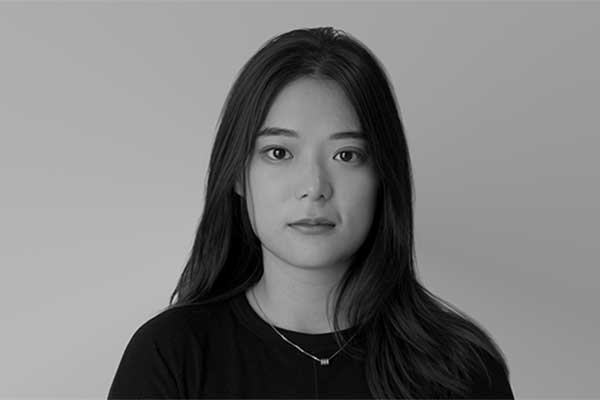
Shimei Qiu
United States
Shimei Qiu is a product designer with seven years of experience creating innovative, business-facing digital platforms and campaigns. She is passionate about celebrating creative excellence and inspiring future designers, bringing strategic impact to the recognition of outstanding achievements in design.
1 Please give us a brief bio of yourself and your background.
I am a product designer with seven years of experience creating innovative, business-facing digital platforms and campaigns. I am passionate about celebrating creative excellence and inspiring future designers, bringing strategic impact to the recognition of outstanding achievements in design.
2 What made you become / why did you choose to become a digital designer / artist?
I’ve always been fascinated by how technology shapes human behavior—and how good design can bridge the gap between complexity and clarity. What inspired me to enter the UX field was a desire to create tools that empower people, not overwhelm them. Early in my career, I worked on a nonprofit food delivery project that showed how even small interface choices can dramatically improve access and efficiency. That experience revealed the power of design beyond aesthetics—it can transform how systems function and how people feel. Since then, I’ve been especially drawn to designing internal tools and AI-powered workflows—spaces where design is often overlooked but deeply impactful. I love the challenge of turning friction-heavy processes into intuitive experiences and am inspired by the idea that thoughtful design can drive both business results and human empowerment.
3 Tell us more about your business / company, job profile, and what you do.
Specializing in complex business products, I have contributed to the TikTok ecosystem through initiatives like TikTok Spotlight and TikTok for Developers, delivering solutions that enhance usability and drive growth. My research-driven design philosophy, grounded in social responsibility and business strategy, balances creativity, functionality, and measurable outcomes.
4 What’s your favorite kind of digital design and why?
I’m most drawn to system-level design—tools and platforms that may not be visible to end users but are vital to how teams operate and collaborate behind the scenes. Whether it’s an internal campaign management tool or a community logistics app like Hive Harvest, I love designing experiences that simplify complexity, bring clarity to operations, and quietly create impact. There’s a distinct satisfaction in transforming something tedious or fragmented into an experience that feels intuitive and empowering—especially when it helps people do meaningful work.
5 To you, what makes a “good” design?
Good design is invisible—it gets out of the way and allows users to achieve their goals without friction. But beyond function, great design also builds trust and clarity, respecting the user’s time, environment, and emotions. To me, good design lives at the intersection of usefulness, usability, and meaning. It solves the right problem, communicates clearly, and leaves the user feeling more confident than when they began.
6 Describe your design style and its main characteristics.
My design style is minimal, purposeful, and systems-aware. I focus on hierarchy, clarity, and consistency—ensuring that even complex workflows feel approachable and intuitive. I often weave in subtle visual storytelling to keep things human, whether through microinteractions or character-based UI elements. I don’t design for attention; I design for flow—how users move through a product, the mental models they bring, and how design can gently guide them from confusion to confidence.
7 Tell us about your design process.
My ideation process is grounded in research, empathy, and structured creativity. I start by deeply understanding the problem space—talking to users, mapping workflows, and uncovering both pain points and opportunities. From there, I define a clear design question or hypothesis to guide ideation. During brainstorming, I balance divergent and convergent thinking. I encourage bold ideas, quick sketches, and collaborative workshops, while guiding the team toward solutions that are feasible, user-centered, and scalable within the system. Once directions are defined, I prototype early and often—testing rough ideas quickly, gathering feedback, and evolving the design through real-world context. For Hive Harvest, for instance, ideation went beyond screens to exploring new incentive models, delivery flows, and visual metaphors inspired by bee colonies. Ultimately, I aim to keep the process open, inclusive, and purposeful—creating experiences that don’t just function well, but truly resonate.
8 Where do you draw inspiration from?
I draw inspiration from a mix of real-world constraints and quiet observations. Sometimes it’s watching a volunteer navigate a delivery route in Hive Harvest; other times it’s found in stories—books, films, even stand-up comedy—where structure and emotion align effortlessly. I’m constantly inspired by conversations with collaborators from other disciplines—engineers, researchers, and community organizers—who help me see challenges from new perspectives. And when I feel stuck, I go outside. Nature has a way of reminding me how elegant systems can be.
9 What current trends in digital design (or really anything digital related) are you most excited about?
One trend I’m especially excited about is the integration of AI into creative workflows—not to replace human creativity, but to amplify it. From AI-assisted content generation to predictive audience insights, marketing and media teams are gaining powerful tools to work smarter, move faster, and personalize experiences at scale. It’s a shift with profound implications for both internal systems and public-facing platforms.
10 Congratulations! As the winner of the 2024 Vega Awards, what does it mean to you and your company and team to receive this award distinction?
It’s a tremendous honor for our team. This recognition goes beyond good design—it validates the values and purpose that guide our work. For a team of passionate creatives, this distinction reinforces our belief that design can—and should—address real-world challenges. Our project, Hive Harvest, was built from the ground up to serve communities, reduce food waste, and create meaningful social impact. Seeing that vision acknowledged on an international stage is deeply rewarding. It’s also a celebration of collaboration. This award reflects the care, empathy, and dedication each member brought—from research and UX to strategy and storytelling. It inspires us to keep moving forward and continue designing with intention.
11 Can you explain a bit about the winning work you entered into the 2024 Vega Awards, and why you chose to enter this project?
Hive Harvest is a digital platform created to reduce food waste and improve access by connecting restaurants with surplus food to local food banks and volunteer drivers. I chose to enter Hive Harvest because it reflects the kind of design I believe in—socially impactful, community-driven, and thoughtfully executed. This project goes beyond the user interface; it’s about building a system that balances diverse needs—logistics, volunteer coordination, and food safety—while keeping the experience simple, intuitive, and human-centered.
12 What was the biggest challenge with this project?
One of the biggest challenges we faced with Hive Harvest was designing for a complex, multi-sided system—balancing the needs of restaurants, food banks, volunteers, and recipients. Each group had distinct motivations, levels of tech literacy, and constraints, so creating a unified experience that felt intuitive for all was no small task. Logistics posed another hurdle. Coordinating pickups and deliveries required careful planning around timing, routing, and real-time updates—especially since many participants were volunteers with limited availability. We also needed to balance social mission with engagement. How could we make the experience meaningful and motivating without gamifying something as sensitive as food insecurity? That’s where our incentive system came in—rewarding volunteers through local partnerships to encourage consistent participation without diluting the purpose. These challenges pushed us to think critically about ethics, accessibility, and system design. Overcoming them transformed Hive Harvest from a product into a platform for collective impact.
13 How has winning an Award developed your practice/career?
Winning an international award has brought remarkable visibility to our project, Hive Harvest, and amplified the social mission behind it. Designed to reduce food waste and improve food access through community-driven logistics, Hive Harvest is more than an app—it’s a call to action. Recognition from global juries has validated the project’s impact and opened new doors for collaboration, media coverage, and cross-sector partnerships. It’s allowed us to share our story—how a small team of passionate designers transformed a local challenge into a scalable solution—with a much wider audience. For our agency, this award not only strengthens our credibility but also reaffirms our belief that design can create meaningful change. It has inspired partners, stakeholders, and emerging talent to join our mission. Most importantly, it’s given Hive Harvest the platform to move beyond concept—toward tangible, real-world impact.
14 What are your top three (3) favorite things about the digital industry?
1. The power of storytelling – I love how marketing and media can translate complex ideas into emotionally resonant narratives. Whether it’s a brand campaign or a mission-driven product like Hive Harvest, the ability to connect with people through story is incredibly powerful. 2. The pace of innovation – This industry is constantly evolving, from AI-driven content to new formats and platforms. It keeps me on my toes as a designer and opens up endless opportunities to experiment and improve how we communicate. 3. Cross-functional collaboration – Marketing and communications require designers, strategists, engineers, and analysts to work in sync. I enjoy being part of that ecosystem—where creative vision meets business strategy and user insight.
15 What makes your country specifically, unique in the digital industry?
China stands out in the digital industry for its sheer scale, speed of innovation, and deep ecosystem integration. From super apps that combine payments, messaging, and services into one seamless experience, to cutting-edge experimentation in AI, e-commerce, and social commerce, China has built a digital environment that’s fast-moving and highly adaptive. As a designer from China, I’m continually inspired by how the market blends technology, design, and everyday behavior. It’s a place where digital solutions evolve at an incredible pace, and where user feedback loops are woven into the very DNA of product development.
16 Where do you see the evolution of digital industry going over the next 5-10 years?
Over the next five to ten years, I see marketing, media, and communications becoming more automated, hyper-personalized, and ethically accountable. AI will continue to transform how we ideate, produce, and distribute content—from auto-generated campaigns to intelligent audience targeting. But the real shift will come from the collaboration between human creativity and machine intelligence, not competition. The most impactful ideas will emerge from teams that design with AI, not just for it. At the same time, audiences will expect greater transparency and authenticity. Brands will need to communicate not only their message, but also their values and impact. Purpose-driven storytelling, like what we explored in Hive Harvest, will evolve from a “nice-to-have” to an essential standard. Internally, the tools that power media and campaign management will become more modular, self-serve, and cross-functional—enabling more people to contribute creatively without silos. Overall, I envision these industries becoming more adaptive, inclusive, and interconnected—and design will play a defining role in shaping that evolution.
17 If you were a student entering this industry or an aspiring Vega Award submitter, what advice would you give them?
Focus less on creating the “perfect” design, and more on solving the right problem. Show how you think, how you adapt, and how you care. Don’t be afraid to start small—some of the most meaningful projects begin with a deep understanding of a local issue or niche need. Awards aren’t just about aesthetics; they’re about intention, storytelling, and clarity.
18 What resources would you recommend to someone who wants to improve their skills in the digital industry?
1. Tools like Miro, Notion, and FigJam They’re invaluable for visualizing messy thoughts, mapping systems, and co-ideating with others. Especially in the early stages, the ability to collaborate visually is a real game-changer. 2. Design awards and case study platforms I regularly explore winning entries on sites like NYX, Red Dot, Awwwards, and Behance. It’s not about imitation, but about understanding how great ideas are structured, positioned, and brought to life. 3. Feedback from cross-disciplinary peers Some of the most valuable breakthroughs come from sharing early ideas with people outside your field. Engineers, researchers, volunteers—even users themselves—often provide fresh perspectives that refine and reframe your direction.
19 Tell us something you have never told anyone else.
I don’t often talk about how frequently I experience imposter syndrome—even after winning awards or leading major projects. There are still moments when I feel like I’m figuring things out as I go, and that can be intimidating. Over time, though, I’ve come to see doubt as a sign of growth—a reminder that I’m stepping into new territory. Rather than trying to silence it, I’ve learned to design through it—with curiosity, humility, and a willingness to keep learning.
20 Who has inspired you in your life and why?
One person who has deeply inspired me is Trevor Noah, especially through his memoir Born a Crime. What moved me most was his unwavering optimism, even amid the most difficult and unjust circumstances. Growing up during apartheid in South Africa, Trevor used humor, resilience, and sharp observation not only to survive but to understand, connect, and transform his experience into something powerful. His story reminds me that creativity, storytelling, and perspective are tools for both survival and change. That same outlook has influenced how I approach design: even when navigating complex systems or social challenges, I strive to remain hopeful, resourceful, and human-centered. His example continues to remind me to ask—how can I turn obstacles into opportunities for impact?
21 What is your key to success? Any parting words of wisdom?
For me, the key to success lies in staying curious, intentional, and grounded in purpose. I’ve learned that great ideas don’t always come from working harder—they come from asking better questions, listening deeply, and remaining open to unexpected insights. Another principle I live by is impact over perfection. In design, it’s easy to get caught up in polishing the details, but true success comes from launching, learning, and improving—while keeping users and purpose at the heart of every decision. If I could leave one parting thought, it would be this: Don’t just chase recognition—chase resonance. Create things that matter, that move people, that solve real problems. That’s where fulfillment—and meaningful success—truly begins.
22 Do you have anything else you would like to add to the interview?
Just a heartfelt thank you for the opportunity to share my work and values. It’s been meaningful to reflect on how design can influence not only the products we create, but also the way we address real social challenges and build systems that empower people.